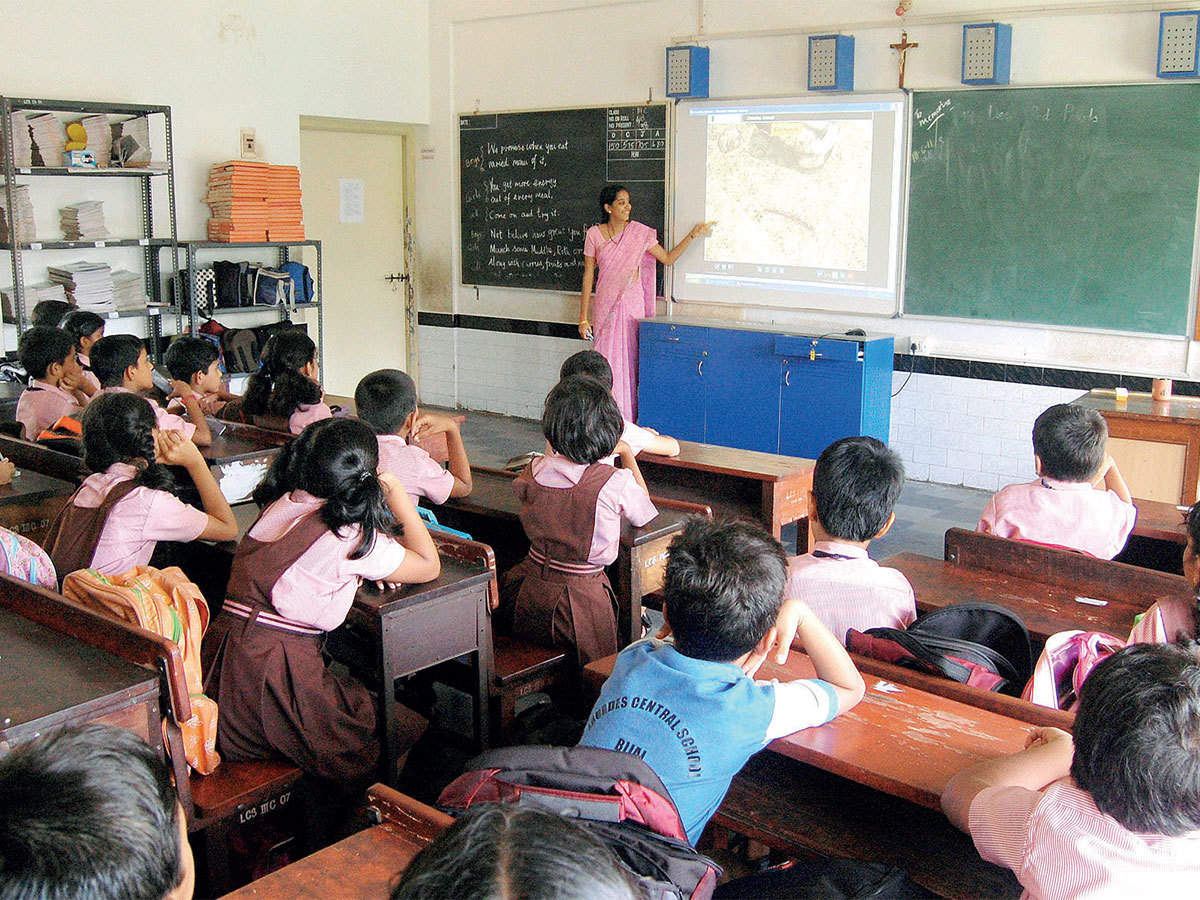
India is currently steering one of the most ambitious educational transformations in human history. With the ultimate goal of transitioning into a developed powerhouse (Viksit Bharat) by 2047, the country is rapidly moving away from colonial-era rote learning toward a dynamic, skill-driven, and highly inclusive knowledge economy.
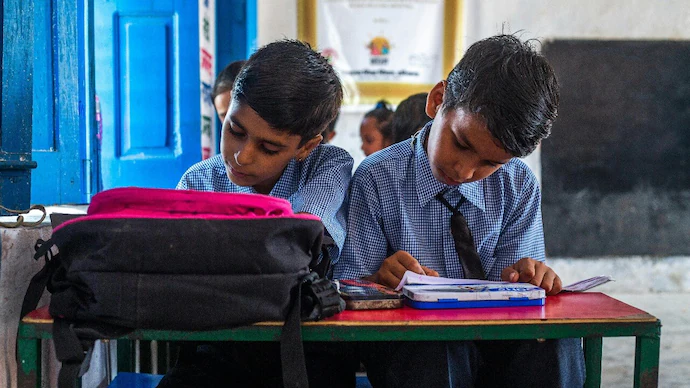
The Scale of the Ambition
To understand India’s education sector, one must first grasp its staggering scale. It is a system built to cater to a youth population larger than the entire population of most nations.
Recent data from the Economic Survey 2024-25 illustrates a massive ecosystem heavily supported by both government initiatives and private enterprise.
The Ecosystem at a Glance
| Metric | Total Count (UDISE+ 2023-24) |
| Total Students | 24.8 Crore (248 Million) |
| Total Schools | 14.72 Lakh |
| Teaching Workforce | 98 Lakh |
| Govt. School Share | 69% of schools (50% of all students) |
| Private School Share | 22.5% of schools (32.6% of all students) |
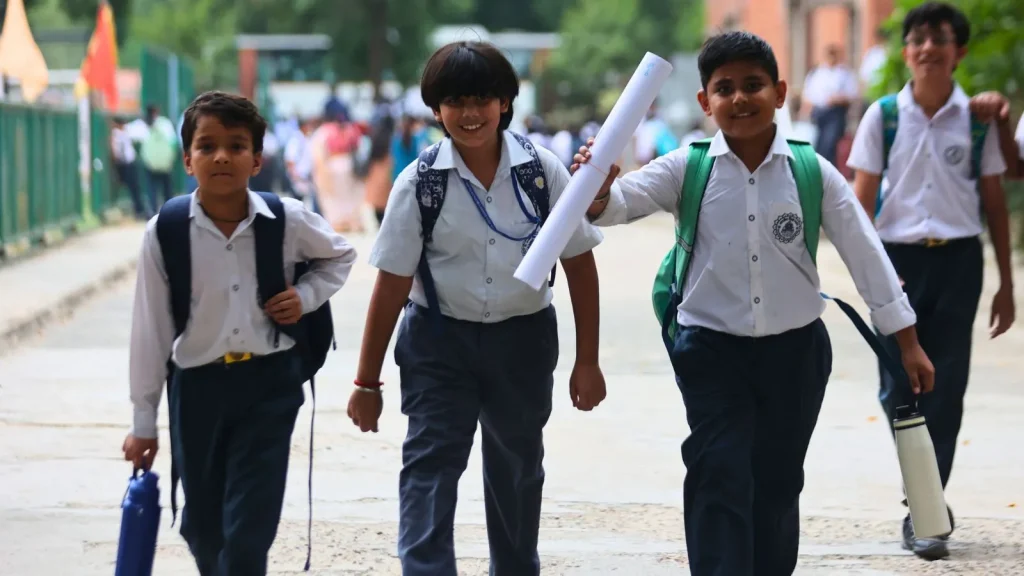
NEP 2020: The Catalyst for Change
The rollout of the National Education Policy (NEP) 2020 was a watershed moment. It fundamentally redesigned how India approaches learning, aiming for a 100% Gross Enrolment Ratio (GER) from pre-primary to the secondary level by 2030.
Here are the boldest shifts driven by the NEP:
- The 5+3+3+4 Structure: The rigid 10+2 system has been scrapped. The new model aligns with the cognitive development stages of children, starting from 3 years of age.
- Focus on Foundational Literacy: The NIPUN Bharat Mission demands that every child achieves basic reading and arithmetic skills by Grade 3.
- Empowering the Disadvantaged: The policy introduces targeted interventions like Special Education Zones and Gender Inclusion Funds specifically designed for Socially and Economically Disadvantaged Groups (SEDGs).
- Skilling from the Start: Vocational exposure now begins early in secondary school, aiming to bridge the severe gap where currently nearly 92% of 14-18-year-olds lack institutional skilling.
Tracking the Progress: The Enrolment Chart
India has successfully made primary education nearly universal, but keeping students in the classroom through high school remains a vital battleground.
Current Gross Enrolment Ratio (GER) Breakdown
| Education Stage | Current GER | Dropout Rate |
| Primary / Preparatory | 93% – 95.4% | 1.9% |
| Upper Primary / Middle | 90.3% | 5.2% |
| Secondary | 77.4% | 14.1% |
| Higher Secondary | 56.2% – 58.4% | N/A |
The Road Ahead: Challenges to Conquer
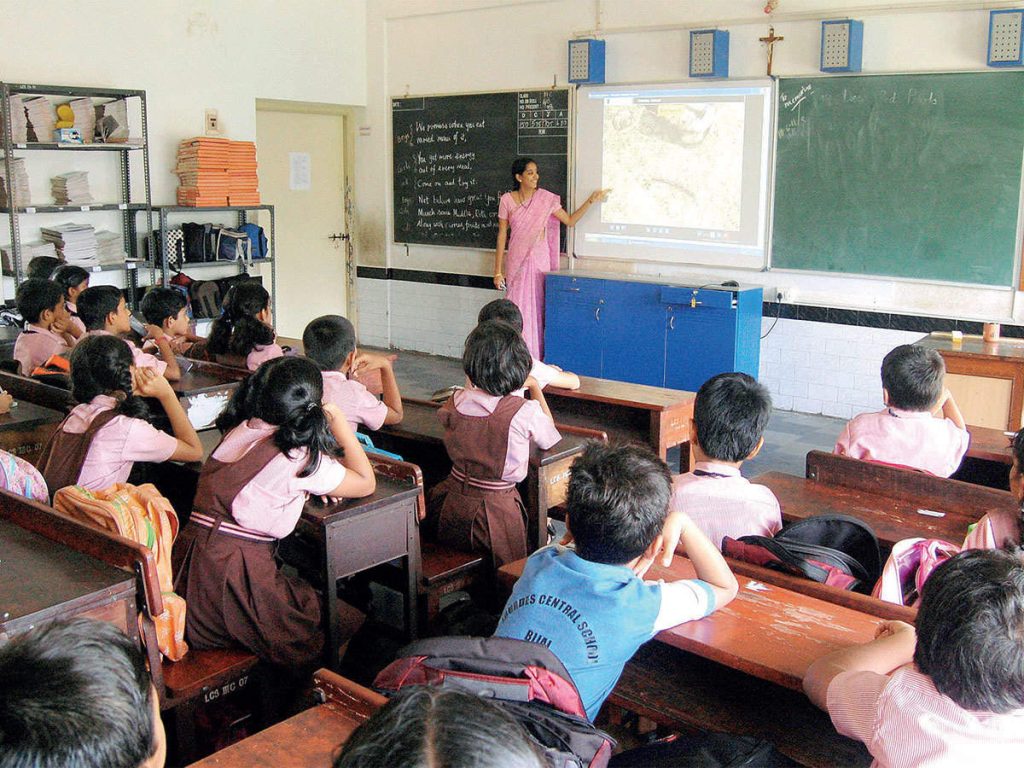
To fully leverage its demographic dividend, India’s education sector must pivot from merely ensuring access to guaranteeing quality.
- Reversing Learning Poverty: Post-pandemic assessments reveal that foundational learning took a hit; a significant percentage of Grade 3 students still struggle with basic texts. Rebounding from this is the system’s top priority. Drishti IAS
- The Teacher Shortage: India faces a deficit of over 1 million teachers, leading to skewed pupil-teacher ratios, particularly in rural and marginalized districts. Drishti IAS
- Higher Education Expansion: Higher education institutions (HEIs) have grown by nearly 14% since 2014-15, but creating flexible, globally competitive universities remains crucial to hitting the NEP’s 50% higher education GER target by 2035. Press Release Page | Press Information Bureau
The next decade will define India’s century. By marrying the massive scale of its schooling system with the qualitative reforms of the NEP 2020, India is laying the foundation to transform its youth into the primary engine of global growth.
NEP 2020, Enrollment Ratios & COVID-19 Impact This video breaks down the evolution of India’s education policies and the realities of current enrollment data.
The Evolution of India’s Education System: From Independence to NEP 2020
S Chand Academy · 2.4K views Open in The Evolution of India’s Education System: From Independence to NEP 2020